If boating is part of how you picture life on the Gulf Coast, Orange Beach deserves a close look. This is a market where your access to the water can shape your daily routine, your maintenance costs, and even the kind of property that makes the most sense to buy. In this guide, you’ll learn how boat slip and marina access homes in Orange Beach work, what to compare before you buy, and which details matter most once you get past the photos. Let’s dive in.
Why Orange Beach Appeals to Boaters
Orange Beach is built around boating access in a very real way. The city lists three public boat launches at Boggy Point near Perdido Pass Bridge, Cotton Bayou, and The Launch at ICW. It also maintains a Canoe Trail with landing sites on Wolf Bay, Bay La Launch, Arnica Bay, Bayou St. John, and Cotton Bayou.
That public access network matters even if you plan to buy a home with a slip or dock. It shows how deeply boating is woven into the area and gives you more flexibility for different kinds of water use. It also helps explain why so many buyers specifically search for canal-front, bayfront, intracoastal, and marina-access properties in Orange Beach.
Orange Beach also has navigation rules that directly affect waterfront living. The city’s no-wake maps note that inshore canals are idle-speed zones. If you are considering a canal-front home, that can influence how quickly you can get out on the water and what day-to-day dock access feels like.
Main Property Types to Compare
When you start looking at boat-friendly homes in Orange Beach, you will usually compare three main access models. Each one offers a different mix of convenience, control, and upkeep.
Homes with a private dock
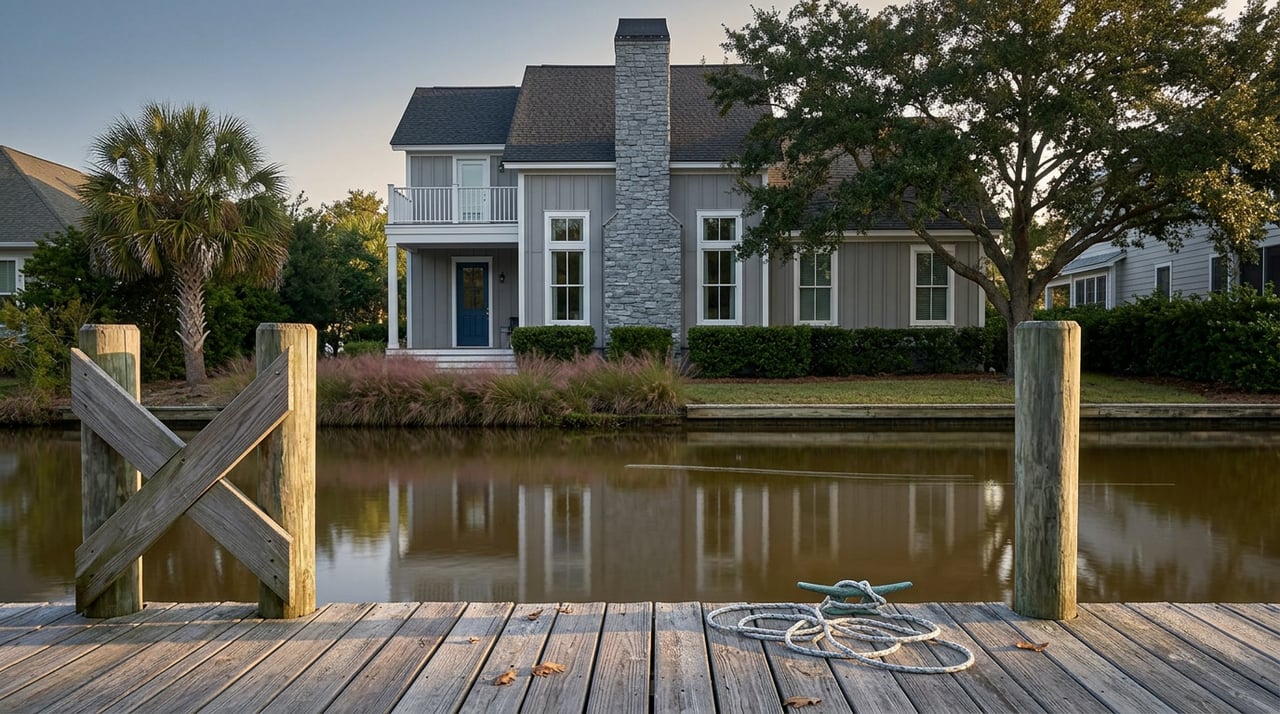
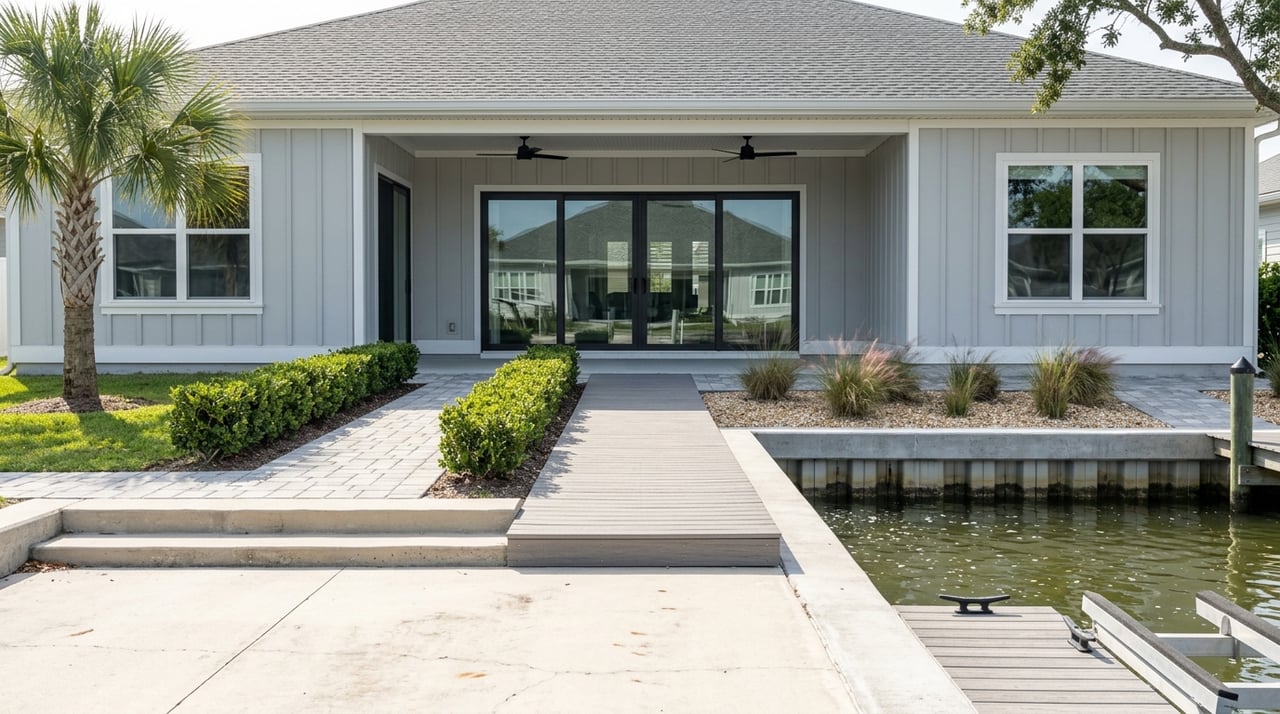
A home with a private dock can give you the most direct access to your boat. You may be able to step out your back door, walk to the dock, and head out without dealing with a separate marina.
That convenience comes with more responsibility. In Orange Beach, piers, decks, and pier or boat houses require a building permit before construction, and those structures must also comply with applicable city, state, and federal approvals. If you are buying an existing setup, you should confirm that the improvements were properly permitted and placed.
Homes with boathouse features
Some waterfront properties include boathouse improvements or the ability to pursue them. Orange Beach zoning says boathouses on waterfront properties receive a rear-yard setback exemption, but they still must meet side setbacks.
Lot lines matter here, especially south of Highway 182, where the city defines waterfront lots by the mean high-tide line. That means surveys and structure placement are important. A feature that looks straightforward in a listing can have real regulatory details behind it.
Homes or condos with marina access
Some buyers prefer a property tied to a marina or community slip arrangement instead of a private dock. This can be a strong fit if you want boating access without taking on all the responsibilities tied to private waterfront improvements.
Orange Beach has several major marina anchors that help support this option. Orange Beach Marina offers covered and open slips in a protected harbor with quick access to Perdido Pass and the Intracoastal Waterway. The Wharf Marina sits on the Intracoastal Canal between mile markers 158 and 159 and includes more than 210 public and private slips plus fuel docks, while Caribe Marina is less than 200 yards from the Perdido Pass bridge and provides water and electrical pedestals at each slip.
Understand How the Slip Is Held
One of the most important parts of buying a boat-access property in Orange Beach is understanding exactly what you are getting. Waterfront does not always mean the slip is owned in the same way.
Current Orange Beach listings use several different terms, including deeded boat slip, assigned boat slip, and boat slip to convey. Those phrases are not interchangeable. They point to different ownership or use arrangements, and the paperwork needs to be reviewed carefully before you make assumptions.
Deeded slip
A deeded slip generally suggests a specific legal ownership interest in the slip. Buyers often like this model because it can offer more certainty than a simple use assignment.
Still, you should verify the exact legal description and confirm what rights transfer with the property. The label in a listing is a starting point, not the final word.
Assigned slip
An assigned slip usually means the right to use a slip is tied to community rules, marina documents, or association structure rather than separate deeded ownership. This may still work well for your needs, but it can come with different rules for transfer, reassignment, or long-term use.
If you are comparing similar waterfront condos, this distinction can make a major difference. Two properties may appear similar online while offering very different boating rights.
Slip to convey
When a listing says a slip will convey, that can sound simple, but you still need to see how the transfer is documented. The actual structure of the transfer may affect financing, title review, and your future flexibility.
This is one of those areas where clear local guidance can save you from expensive confusion. It is worth slowing down and verifying every boating-related document early.
Marina Rules Can Vary Widely
Not all marinas operate the same way, and not every slip works for every boat. That is why buyers should compare the marina itself, not just the home or condo attached to the deal.
For example, Caribe Marina says no liveaboards are permitted. Safe Harbor Sportsman publishes specific limits for wet slips, including lengths from 35 to 72 feet, a 22-foot beam, and an 8-foot draft, and it offers both wet slips and dry storage.
These differences matter in practical ways. A slip might look perfect on paper, but it may not fit your vessel, your boating habits, or your plans for guests and gear.
Dry Storage vs Wet Slip Access
Some buyers assume they need a wet slip, but dry storage can be a smart option depending on how you use your boat. It may reduce in-water exposure and can make sense if you do not need immediate dockside departure every day.
Barber Marina, just north of Orange Beach on the Intracoastal Waterway, has a 400-slip dry-storage building for boats up to 42 feet and 42,000 pounds. Safe Harbor Sportsman also offers both wet slips and dry storage, which shows how common it is for local buyers to weigh both options.
Wet slip benefits
A wet slip can offer quick launch convenience and a more traditional marina lifestyle. It may be especially attractive if you use your boat often and want less hassle between arrival and departure.
Some slips also include services that simplify ownership. Depending on the marina, that may include water, electric, Wi-Fi, pump-out access, or dock boxes.
Dry storage benefits
Dry storage can appeal to buyers who want boating access without maintaining a boat in the water full time. It can also be useful if your boating schedule is more occasional than daily.
The right answer depends on your boat, your budget, and how you want your weekends to feel. Convenience looks different for every buyer.
Permits and Coastal Rules Matter
If your plan involves adding, rebuilding, or modifying a private dock or boathouse, you need to understand the permitting side before you buy. In Orange Beach, these structures are regulated and cannot be treated like casual add-ons.
The city requires a building permit before piers, decks, or pier and boat houses are built. In addition, ADEM says pile-supported piers, docks, and boathouses must allow the ebb and flow of the tide and should not be built over wetlands or submerged grassbeds. They must also be designed to minimize impacts to those areas.
For marina projects, ADEM requires a site plan, an operation-and-maintenance plan, sewage pump-out and restroom provisions, stormwater documentation when applicable, and a submerged lands lease or waiver. Even if you are buying an existing property rather than developing one, these rules help explain why one waterfront setup may be easier to maintain or modify than another.
Costs Go Beyond the Purchase Price
It is easy to focus on views and water access and forget the long-term operating side. In Orange Beach, the ownership model often drives the real cost exposure.
A condo or marina slip may include some utilities and services, but amenities are not universal. Caribe provides water and electrical pedestals, while Safe Harbor advertises items like Wi-Fi, pump-out, and dock boxes at the slip.
Parking and trailer logistics can matter too. Orange Beach zoning sets marina parking standards tied to slips and marine dry storage, which means practical access costs are part of the bigger picture. A boating property works best when the everyday details fit your routine, not just your wish list.
Storm Exposure and Navigation Rules
Convenience is important, but so is resilience. If you are buying a boat-access home in Orange Beach, you should think about how the property functions when conditions are less than ideal.
The city maintains a dedicated page on preparing a boat for hurricanes, which reflects how central storm planning is to local boat ownership. Orange Beach has also promoted safe boating around the restored Perdido Islands, including no-wake and no-motor zones and protected seagrass areas.
For you as a buyer, that means the best slip or dock is not always the one that looks closest or easiest. You also want to evaluate storm exposure, wake exposure, navigation restrictions, and how protected the route is from your home or marina to open water.
Search Terms That Help You Find the Right Property
If you are browsing listings in Orange Beach, the right keywords can save a lot of time. Many boating-related features are signaled directly in listing language.
Useful terms include:
- boat slip
- deeded boat slip
- assigned boat slip
- boat launch
- wet slip
- dry storage
- boat lift
- marina
- waterfront condo
- bayfront
- canal-front
- intracoastal
These terms are especially helpful because current Orange Beach listings use them in active marketing. They can help you sort quickly between homes that simply sit near water and homes that may actually support the kind of boating access you want.
What to Verify Before You Make an Offer
Before you move forward on a boat slip or marina access property, take time to confirm the details that do not always show up clearly in photos. In this part of the market, small boating details can affect daily use and long-term value.
Here is a smart checklist to review:
- Legal status of the slip
- Whether the slip is deeded, assigned, or set to convey
- Actual slip dimensions
- Lift capacity, if a lift is included
- Water depth at the slip or dock
- Utility hookups such as water or electric
- Parking availability
- Trailer rules
- Liveaboard restrictions
- Rental or use restrictions
- Existing permits for private dock or boathouse improvements
This kind of verification is especially important in Orange Beach because different pieces of the boating setup may be regulated by the city, ADEM, and the marina operator. The more clearly you understand those layers up front, the more confident your purchase decision will be.
If you want help narrowing down Orange Beach homes with boat slips, marina access, canal frontage, or bayfront options, Hunter Brown can help you compare the details that really matter so you can buy with clarity.
FAQs
What does deeded boat slip mean in Orange Beach listings?
- A deeded boat slip usually means a specific ownership interest in the slip, but you should still verify the legal documents to confirm exactly what transfers with the property.
What is the difference between an assigned slip and a slip that conveys in Orange Beach?
- An assigned slip usually reflects a use right governed by community or marina rules, while a slip that conveys may transfer with the sale through a specific documented arrangement that still needs careful review.
Can you build a private dock or boathouse at an Orange Beach waterfront home?
- Possibly, but Orange Beach requires a building permit for piers, decks, and pier or boat houses, and applicable city, state, and federal approvals may also be required.
Are all Orange Beach marina slips the same size and use type?
- No. Marina rules can vary by operator, including slip dimensions, draft limits, available services, and use restrictions such as liveaboard policies.
What should you check before buying a boat-access home in Orange Beach?
- You should verify the slip’s legal status, dimensions, lift capacity, water depth, utility hookups, parking and trailer rules, and any liveaboard or rental restrictions.
Are canal-front homes in Orange Beach affected by no-wake rules?
- Yes. The city’s no-wake maps note that inshore canals are idle-speed zones, which can affect how you access open water from canal-front property.